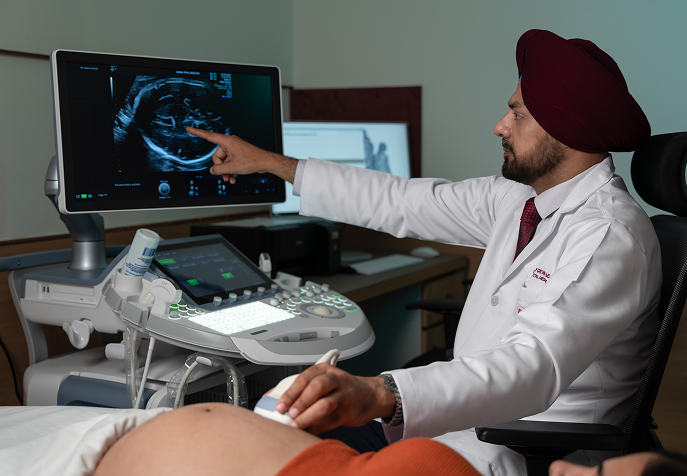
Pregnancy is an exciting journey filled with many milestones, and ultrasound scans are an important part of prenatal care. Many expectant parents often wonder how many ultrasounds during pregnancy are considered safe and necessary. With advancements in fetal medicine, ultrasounds have become a valuable tool for monitoring both the baby’s growth and the mother’s health throughout pregnancy. At The Garbh, we believe in combining advanced fetal imaging with compassionate prenatal care. Understanding the purpose and safety of each scan can help parents feel more informed and confident during pregnancy.
What Is an Ultrasound During Pregnancy?
An ultrasound during pregnancy is a safe imaging technique that uses sound waves to create pictures of the developing baby inside the womb. Unlike X-rays, ultrasounds do not use radiation, making them widely accepted as a safe prenatal imaging method.
Doctors and fetal medicine specialists use ultrasounds to monitor fetal growth, check the baby’s heartbeat, assess the placenta, estimate due dates, and identify certain developmental conditions. Over the years, many parents have asked how many ultrasounds during pregnancy are needed for a healthy pregnancy journey.
Why Are Ultrasounds Important During Pregnancy?
Ultrasounds provide valuable information at different stages of pregnancy. They help specialists evaluate fetal development and monitor maternal health. An ultrasound during pregnancy can also offer reassurance to parents by allowing them to see their baby’s growth and movements.
At The Garbh, ultrasound evaluations are performed using advanced imaging technology to ensure accurate prenatal assessments. These scans play an important role in fetal medicine and pregnancy monitoring.
How Many Ultrasounds During Pregnancy Are Usually Done?
One of the most common questions expectant parents ask is how many ultrasounds during pregnancy are generally recommended. In a typical low-risk pregnancy, most women undergo two to four scans. However, the exact number may vary depending on individual medical needs, pregnancy history, and fetal development.
Understanding how many scans are done in pregnancy often depends on whether the pregnancy is considered low-risk or high-risk. Some pregnancies may require additional monitoring for medical reasons.
Common Pregnancy Ultrasound Timeline
1. Early Pregnancy Scan
This scan is usually performed during the first trimester to confirm pregnancy, check the heartbeat, and estimate the due date.
2. Nuchal Translucency Scan
Performed between 11 and 14 weeks, this scan evaluates certain markers related to chromosomal conditions.
3. Anomaly Scan
This detailed scan is usually done around 18–22 weeks to assess the baby’s anatomy and development.
4. Growth Scans
Additional scans may be recommended later in pregnancy to monitor fetal growth, amniotic fluid, and placental health.
These stages help answer the question of how many ultrasounds during pregnancy are commonly performed in routine prenatal care.
Are Ultrasounds Safe During Pregnancy?
Many parents naturally worry about safety and ask how many scans are safe during pregnancy. According to current medical understanding, diagnostic ultrasounds performed by trained professionals are considered safe during pregnancy when used appropriately.
An ultrasound during pregnancy does not expose the baby to ionizing radiation. Instead, it uses high-frequency sound waves to create images. Medical organizations worldwide continue to support the use of prenatal ultrasound for monitoring fetal health.
At The Garbh, all scans are conducted by qualified fetal medicine specialists using modern equipment and established safety protocols.
Factors That Influence How Many Ultrasounds Are Needed
The answer to how many ultrasounds during pregnancy can vary based on several factors, including:
- Maternal age
- Previous pregnancy history
- Twin or multiple pregnancies
- Medical conditions such as diabetes or hypertension
- IVF pregnancies
- Concerns about fetal growth or development
In high-risk pregnancies, doctors may recommend more frequent scans to monitor the baby and mother closely. This is why how many scans are done in pregnancy may differ from one person to another.
Understanding High-Risk Pregnancy Monitoring
For high-risk pregnancies, additional imaging may be required throughout the pregnancy journey. Parents often ask how many scans are safe during pregnancy when more monitoring is suggested.
In these situations, specialists use ultrasounds to assess fetal growth, blood flow, placental function, and overall pregnancy health. At The Garbh, advanced fetal monitoring helps provide detailed insights while maintaining a patient-focused and supportive approach.
Types of Ultrasound During Pregnancy
There are different kinds of ultrasound during pregnancy, each serving a specific purpose.
2D Ultrasound
This is the standard scan used for routine fetal assessment.
3D Ultrasound
Provides three-dimensional images of the baby’s face and body structures.
4D Ultrasound
Shows real-time fetal movement with moving images.
Doppler Ultrasound
Evaluates blood flow between the baby and placenta.
The type and number of scans may influence discussions about how many ultrasounds during pregnancy are needed in specific medical situations.
Can Too Many Ultrasounds Harm the Baby?
Scientific research has not shown evidence that medically necessary ultrasounds harm the baby when performed correctly. However, experts generally recommend using ultrasounds only for medical purposes rather than entertainment.
This is why many parents ask how many scans are safe during pregnancy. The focus remains on using scans appropriately for prenatal monitoring and fetal evaluation.
At The Garbh, every scan is performed with a clear medical objective and guided by fetal medicine expertise.
Emotional Benefits of Pregnancy Ultrasounds
Besides medical assessment, ultrasounds also provide emotional reassurance for families. Seeing the baby’s heartbeat or movements often strengthens the emotional connection between parents and their unborn child.
Many families visiting for an ultrasound scan in Chandigarh appreciate the opportunity to understand their baby’s growth more clearly. The Garbh focuses on creating a supportive and comfortable environment during every stage of prenatal care.
Advanced Ultrasound Care at The Garbh
Choosing the right fetal medicine center is important for accurate pregnancy monitoring. The Garbh offers advanced prenatal imaging services with experienced specialists dedicated to maternal and fetal health.
Whether parents are seeking routine scans or a specialized ultrasound scan in Chandigarh, The Garbh provides evidence-based care using advanced ultrasound technology. The center is committed to delivering detailed assessments while supporting families throughout pregnancy.
How Many Ultrasounds During Pregnancy Are Considered Normal?
There is no universal number that applies to every pregnancy. The answer to how many ultrasounds during pregnancy depends on individual medical needs, fetal health, and recommendations from fetal medicine specialists.
For many women, two to four scans are common during routine pregnancies. In some cases, additional scans may be required to ensure proper monitoring. Understanding how many scans are done in pregnancy can help parents feel more prepared and informed during prenatal care.
FAQs
How many ultrasounds are usually done during a normal pregnancy?
Ans.In a normal pregnancy, most women usually have around 2 to 4 ultrasound scans. The exact number can vary depending on the pregnancy stage, medical history, and the baby’s growth and development.
Why are ultrasounds needed during pregnancy?
Ans.An ultrasound during pregnancy helps monitor the baby’s growth, heartbeat, organs, placenta, and overall development. It also helps estimate the due date and identify any pregnancy-related concerns at different stages.
Are multiple ultrasounds safe for the baby?
Ans.Yes, diagnostic ultrasounds performed by trained professionals are considered safe during pregnancy. Ultrasounds use sound waves, not radiation, and are widely used in prenatal care across the world.
At what stages are ultrasounds done during pregnancy?
Ans.Ultrasounds are commonly performed during the first trimester for dating and viability, between 11–14 weeks for NT scans, around 18–22 weeks for anomaly scans, and later in pregnancy for growth monitoring if required.
Do ultrasounds have any side effects during pregnancy?
Ans.There is no proven evidence that medically recommended ultrasound scans cause harmful side effects during pregnancy when performed correctly by qualified healthcare professionals.
Is ultrasound necessary in every pregnancy?
Ans.Ultrasounds are an important part of prenatal care because they help doctors monitor fetal growth, pregnancy progress, and maternal health. The number and type of scans may vary for each pregnancy.
What happens if more scans are needed during pregnancy?
Ans.Some pregnancies may require additional monitoring due to medical conditions, twin pregnancies, IVF pregnancies, or concerns about fetal growth. In such cases, extra ultrasounds help specialists closely monitor the health of both mother and baby.