Pregnancy is a journey filled with important milestones, and prenatal screening plays a key role in monitoring the baby's development. Among the most commonly recommended first-trimester screening tests are the NT Scan and the Double Marker Test. Many expectant parents often want to understand the difference between NT scan and double marker test before undergoing these screenings. Although both tests are performed around the same stage of pregnancy, they have different purposes and methods. Understanding the difference between NT scan and double marker test can help families better appreciate how these screenings contribute to prenatal care. At The Garbh, our fetal medicine specialists offer advanced prenatal screening with compassionate guidance, helping expectant parents make informed decisions throughout pregnancy.
What is an NT Scan?
Before understanding the difference between NT scan and double marker test, it is important to know what an NT scan is.
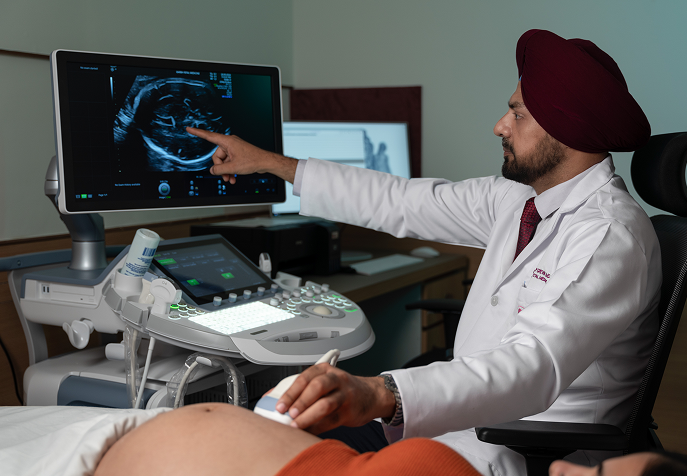
An NT (Nuchal Translucency) Scan is a specialized ultrasound performed during the first trimester, usually between 11 and 13 weeks plus 6 days of pregnancy. It measures the fluid-filled space at the back of the baby’s neck. An increased measurement may indicate a higher risk of certain chromosomal or structural conditions.
Parents looking for an NT scan in Chandigarh can benefit from advanced ultrasound technology and fetal medicine expertise available at The Garbh.
What is a Double Marker Test?
Another important part of first-trimester screening is the Double Marker Test.
If you’re wondering what is NT scan and double marker test, the Double Marker Test is a blood test performed on the mother. It measures two pregnancy-related substances in the blood:
- Free Beta hCG
- PAPP-A (Pregnancy Associated Plasma Protein-A)
These results are combined with the NT scan findings, maternal age, and other clinical information to estimate the baby’s risk of certain chromosomal abnormalities.
The Double Marker Test in Chandigarh is commonly performed alongside the NT scan for comprehensive first-trimester screening.
Difference Between NT Scan and Double Marker Test
Understanding the difference between NT scan and double marker test becomes easier by comparing their purpose, procedure, and results.
1. Type of Test
The primary difference between NT scan and double marker test is the type of examination.
- NT Scan is an ultrasound examination.
- Double Marker Test is a maternal blood test.
Both are non-invasive and are usually performed during the same stage of pregnancy.
2. What They Measure
Another important difference between NT scan and double marker test is what each evaluates.
The NT scan measures the thickness of fluid behind the baby’s neck.
The Double Marker Test measures specific pregnancy hormones in the mother’s bloodstream.
Together, NT scan and double marker test provide a more complete assessment of chromosomal risk.
3. Purpose
The difference between NT scan and double marker test also lies in their role during prenatal screening.
The NT scan evaluates physical markers visible on ultrasound, while the Double Marker Test provides biochemical information from maternal blood.
When combined, NT scan and double marker test improve the accuracy of first-trimester screening.
Why Are Both Tests Recommended Together?
Many parents ask what is NT scan and double marker test and whether both are necessary.
Although each test provides valuable information individually, combining NT scan and double marker test allows specialists to calculate a more accurate risk assessment for chromosomal conditions.
This combined screening helps estimate the likelihood of conditions such as:
- Down syndrome (Trisomy 21)
- Edwards syndrome (Trisomy 18)
- Patau syndrome (Trisomy 13)
At The Garbh, fetal medicine specialists carefully interpret both screening results to provide detailed prenatal counselling.
When Are These Tests Performed?
Timing is another important aspect when discussing the difference between NT scan and double marker test.
Both tests are usually performed between 11 weeks and 13 weeks plus 6 days of pregnancy.
The ultrasound and blood test are often scheduled close together so the results can be combined for a comprehensive risk assessment.
Parents seeking an NT scan in Chandigarh often undergo the Double Marker Test during the same visit or within a short interval.
Accuracy of NT Scan and Double Marker Test
Many families wonder about the accuracy while comparing the difference between NT scan and double marker test.
Neither test provides a definitive diagnosis. Instead, they estimate the probability of certain chromosomal conditions.
When NT scan and double marker test are interpreted together, the detection rate is significantly improved compared to using either test alone.
If screening indicates a higher risk, additional diagnostic testing may sometimes be considered.
Advantages of Combined First-Trimester Screening
Understanding the difference between NT scan and double marker test also means appreciating how they complement one another.
Some advantages include:
- Early pregnancy screening
- Completely non-invasive procedures
- Better risk estimation when combined
- Supports informed prenatal planning
- Helps identify pregnancies requiring further evaluation
At The Garbh, advanced prenatal screening combines high-resolution ultrasound with accurate laboratory testing to support expectant parents throughout pregnancy.
Are These Diagnostic Tests?
A common misconception when discussing the difference between NT scan and double marker test is that these tests diagnose genetic conditions.
In reality, both are screening tests, not diagnostic tests.
Their purpose is to estimate whether the pregnancy has a low or high probability of certain chromosomal abnormalities.
If needed, specialists may discuss additional diagnostic options after reviewing the screening results.
Choosing the Right Centre for Prenatal Screening
The quality of prenatal screening depends on experienced fetal medicine specialists, advanced ultrasound equipment, and accurate laboratory services.
Whether you’re looking for an NT scan in Chandigarh or a Double Marker Test in Chandigarh, choosing a specialised fetal medicine centre is important.
At The Garbh, our dedicated fetal medicine team provides:
- Advanced first-trimester ultrasound
- Accurate laboratory screening
- Individualised counselling
- Compassionate prenatal care
- Comprehensive fetal assessment
Our goal is to provide reliable information while supporting families throughout every stage of pregnancy.
Conclusion
Understanding the difference between NT scan and double marker test helps expectant parents better understand first-trimester prenatal screening. While the NT scan evaluates physical markers through ultrasound, the Double Marker Test measures pregnancy-related hormones in the mother’s blood.
At The Garbh, we are committed to offering advanced prenatal screening services, including NT scan in Chandigarh and Double Marker Test in Chandigarh, supported by experienced fetal medicine specialists and compassionate care.
FAQs
What is the difference between an NT Scan and a Double Marker Test?
Ans.An NT Scan is an ultrasound that measures the fluid behind the baby’s neck, while the Double Marker Test is a maternal blood test that measures pregnancy-related hormones. Together, they help estimate the risk of certain chromosomal conditions.
Which is more accurate: NT Scan or Double Marker Test?
Ans.Neither test alone is more accurate than the combined first-trimester screening. Using both tests together provides a more reliable risk assessment.
Can I skip the Double Marker Test if my NT Scan results are normal?
Ans.A normal NT scan does not replace the Double Marker Test. Combining both tests improves the overall accuracy of first-trimester screening.
What conditions can NT Scan and Double Marker Test help detect?
Ans.These screening tests help estimate the risk of chromosomal conditions such as Down syndrome (Trisomy 21), Edwards syndrome (Trisomy 18), and Patau syndrome (Trisomy 13).
When should NT Scan and Double Marker Test be performed during pregnancy?
Ans.Both tests are generally performed between 11 weeks and 13 weeks plus 6 days of pregnancy for first-trimester screening.
What happens if the NT Scan or Double Marker Test shows a high-risk result?
Ans.A high-risk result indicates an increased chance of certain chromosomal conditions. Healthcare providers may discuss additional evaluation or diagnostic testing to obtain more information.
Are NT Scan and Double Marker Test safe for both mother and baby?
Ans.Yes. Both the NT scan and the Double Marker Test are non-invasive procedures and are considered safe for both the mother and the developing baby.